
Parenting
Children Need a Safe, Happy Environment
குழந்தைகளுக்கு பாதுகாப்பான, மகிழ்ச்சியான சூழல் வேண்டும்
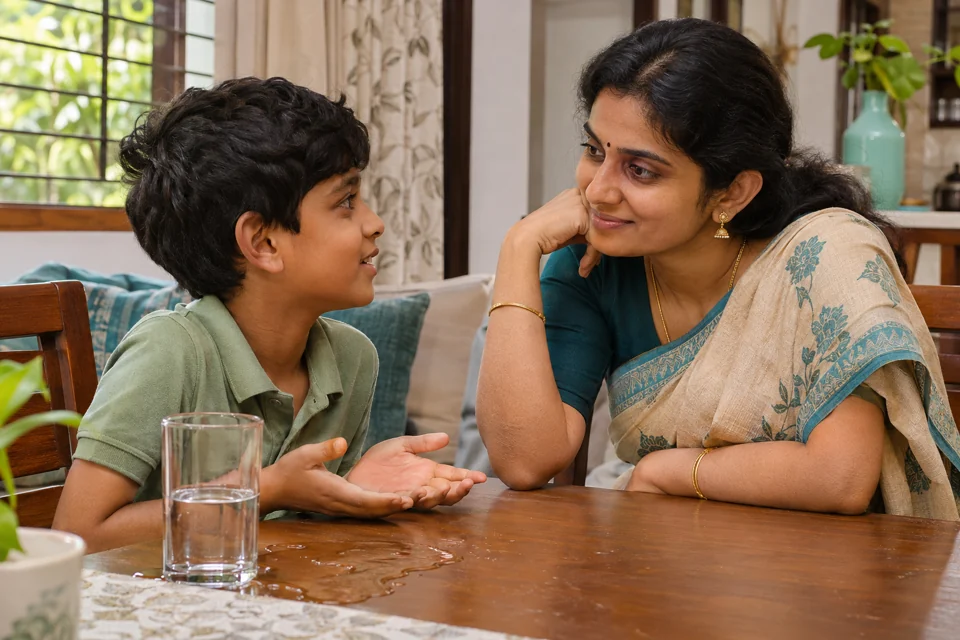
An everyday parenting moment—and the difference a caring response can make.
English translation of Dr. Mehar’s Tamil writing.
A child’s brain does not need constant correction—it needs a safe, happy environment.
Recently, a small incident I noticed in a restaurant made me reflect deeply on how the human brain works.
A family was having a meal. A boy of about 10–12 poured water into a tumbler and drank it. Then he poured the remaining water back into the jug.
His father immediately scolded him: “Don’t you have any sense? Why did you do that?” The boy said nothing and sat with his head lowered.
A few minutes later, while ordering, he asked for a dosa. It was unavailable. He asked for something else, which was also unavailable. His father shouted again: “Will you only ask for things they don’t have?” The boy fell silent once more.
Within half an hour, his feelings had been hurt twice. What happens when such moments occur five or ten times a day? This is where stress can begin.
As adults, we think: “We must correct children now so they grow up well. We must point out mistakes immediately. Discipline must begin early.” That is what our reasoning tells us. But the human brain expects something else.
Repeatedly pointing out mistakes is not simply information to a child; it can be emotional pain. When this pain repeats, the brain enters what I describe as “Suffering Mode.” In this state, thinking clearly, learning and behaviour can be affected.
Then we ask, “Why is this child behaving like this?” The child may not want to misbehave. Their behaviour may reflect the pain they are already experiencing.
If a child accidentally knocks over a glass, we often say, “How many times have I told you? Can’t you watch where you walk?” Instead, we could respond calmly: “It’s all right. I should have placed it somewhere else. Next time I’ll choose a better spot.” Or use encouragement and gentle humour.
This does not mean hiding a mistake. It means protecting the child’s sense of safety first, then teaching them about life.
Appreciation, recognition, love, safety and feeling understood are important. In my view, these feelings help create a happier state in which children begin to think, recognise mistakes and develop responsibility.
Discipline created through fear is temporary. Responsibility nurtured through happiness can last.
Rather than constantly trying to correct children, let us create surroundings in which they feel happy and safe. Children need love, appreciation, understanding and emotional safety alongside guidance.
You, too, can grow into feeling confident as a parent.
தமிழ் · அசல் பதிவு
குழந்தையின் மூளைக்கு திருத்தம் வேண்டாம்… பாதுகாப்பான மகிழ்ச்சியான சூழல் வேண்டும்!
சமீபத்தில் ஒரு உணவகத்தில் நான் கவனித்த ஒரு சிறிய சம்பவம், மனித மூளை எப்படி செயல்படுகிறது என்பதை மிகவும் ஆழமாக புரிய வைத்தது.
ஒரு குடும்பம் உணவருந்திக் கொண்டிருந்தது. சுமார் 10–12 வயதுடைய ஒரு சிறுவன் தண்ணீர் எடுத்து டம்ளரில் ஊற்றிக் குடித்தான். பின்னர் மீதமிருந்த தண்ணீரை மீண்டும் ஜக்கில் ஊற்றிவிட்டான்.
அதைப் பார்த்த தந்தை உடனே கோபமாக,
“உனக்கு அறிவு இல்லையா? ஏன் இப்படிச் செய்தாய்?” என்று கண்டித்தார்.
அந்த சிறுவன் எதுவும் பேசவில்லை. அமைதியாகத் தலைகுனிந்து அமர்ந்திருந்தான்.
சில நிமிடங்கள் கழித்து உணவு ஆர்டர் செய்யும்போது, அவன் தோசை கேட்டான். அது இல்லை என்று சொன்னார்கள். பிறகு வேறு ஒரு உணவை கேட்டான். அதுவும் இல்லை.
உடனே தந்தை மீண்டும்,
“இல்லாததைத்தான் கேட்பியா?” என்று சத்தமாகக் கூறினார்.
மீண்டும் அந்த சிறுவன் அமைதியாகிவிட்டான்.
வெறும் அரை மணி நேரத்தில் இரண்டு முறை அவன் மனம் காயமடைந்தது.
ஒரு நாளில் இதுபோன்ற சம்பவங்கள் ஐந்து முறை, பத்து முறை நடந்தால் என்ன ஆகும்?
இதுவே மனஅழுத்தத்தின் ஆரம்பம்.
நாம் பெரியவர்கள் என்ன நினைக்கிறோம்?
“இப்போது திருத்தினால்தான் குழந்தை நல்லவனாக வளரும்.”
“தவறை உடனே சுட்டிக்காட்ட வேண்டும்.”
“சிறு வயதிலேயே ஒழுக்கம் கற்றுக்கொடுக்க வேண்டும்.”
இவை எல்லாம் நமது அறிவு சொல்வது.
ஆனால் மனித மூளை வேறு ஒன்றை எதிர்பார்க்கிறது.
மூளைக்கு தொடர்ந்து தவறுகளைச் சுட்டிக்காட்டுவது ஒரு தகவல் அல்ல; அது ஒரு உணர்ச்சி வலி.
இந்த வலி மீண்டும் மீண்டும் ஏற்படும்போது, மூளை “சிரம நிலை” (Suffering Mode)-க்கு மாறுகிறது.
அந்த நிலையில் குழந்தை தெளிவாக சிந்திக்க முடியாது. கற்றுக்கொள்ளும் திறன் குறையும். நடத்தையும் பாதிக்கப்படும்.
அப்போது நாம்,
“இவன் ஏன் இப்படி நடக்கிறான்?” என்று கேட்கிறோம்.
உண்மையில் குழந்தை தவறாக நடக்க விரும்புவதில்லை.
அதன் மூளை ஏற்கனவே வலியில் இருப்பதால், அதன் நடத்தையும் பாதிக்கப்படுகிறது.
ஒரு குழந்தை தவறுதலாக ஒரு கண்ணாடியை காலால் தட்டிவிட்டால், நாம் பொதுவாக,
“எத்தனை தடவை சொல்லியிருக்கேன்? பார்த்து நடக்க முடியாதா?” என்று கண்டிப்போம்.
ஆனால் இதற்கு பதிலாக,
“பரவாயில்லை… இதை நான் இங்கே வைத்ததே என் தவறு. அடுத்த முறை வேறு இடத்தில் வைக்கிறேன்.”
என்று சொல்லலாம்.
அல்லது,
“அட… உன் காலில் நல்ல பலம் இருக்கிறது! இப்படியே பயிற்சி செய்தால் நல்ல கால்பந்து வீரனாக வருவாய்!”
என்று உற்சாகப்படுத்தலாம்.
இது தவறை மறைப்பது அல்ல.
முதலில் குழந்தையின் மனதை பாதுகாப்பாக வைத்துக்கொண்டு, அதன் பிறகு வாழ்க்கையை கற்றுக்கொடுப்பது.
மனித மூளைக்கு மிகவும் தேவையானவை:
* பாராட்டு
* அங்கீகாரம்
* அன்பு
* பாதுகாப்பு
* புரிந்துகொள்ளப்படுகிறேன் என்ற உணர்வு
இந்த உணர்வுகள் கிடைக்கும்போது மூளையில் மகிழ்ச்சியை உருவாக்கும் ரசாயனங்கள் சுரக்கின்றன.
அந்த நிலையில் குழந்தை தானாகவே சிந்திக்கத் தொடங்குகிறது.
தவறுகளைத் தானாக உணர்கிறது.
பொறுப்புணர்வு இயல்பாக வளர்கிறது.
பயம் உருவாக்கும் ஒழுக்கம் தற்காலிகமானது.
ஆனால் மகிழ்ச்சியில் வளர்ந்த பொறுப்புணர்வு வாழ்நாள் முழுவதும் நிலைத்திருக்கும்.
எனவே குழந்தைகளை தொடர்ந்து திருத்த முயற்சிப்பதை விட, அவர்கள் மகிழ்ச்சியாகவும் பாதுகாப்பாகவும் உணரும் சூழலை உருவாக்குவோம்.
மகிழ்ச்சியான மூளை வேகமாக கற்றுக்கொள்கிறது.
பாதுகாப்பாக உணரும் மனம் பொறுப்புள்ள மனிதனாக வளர்கிறது.
குழந்தைகளுக்கு அதிகமான அறிவுரைகள் தேவையில்லை; அதிகமான அன்பு, பாராட்டு, புரிதல் மற்றும் உணர்வுப் பாதுகாப்பு தேவை.
நீங்களும் சிறந்த பெற்றோர் என்ற உணர்வை பெற முடியும்.
எனது பத்துநாள் பயிற்சியில் கலந்து கொள்ளுங்கள்.
Dr. Mehar Nithyan, PhD. Psychology
Director- Calmscious Psychotherapy Clinic
@918838428286